How to train a dog using positive reinforcement (and why it stops working outside)
Treats work brilliantly at home, then your dog ignores you on walks. Here is why that happens and a step-by-step way to fix it kindly.
Positive reinforcement in one sentence
You reward the behaviour you want, the moment it happens, so your dog is more likely to repeat it. That is all positive reinforcement means — no shouting, no lead jerks, no pain.
It is the approach recommended by UK welfare organisations such as the RSPCA and the Dogs Trust, because it changes how a dog feels about a situation rather than just suppressing a reaction.
Why it seems to fail outside
Most owners hit the same wall: a dog who sits perfectly in the kitchen will not even look at a sausage when another dog appears across the road. The training hasn't failed — your dog is simply over threshold.
Once a dog is that aroused, their attention is locked onto the trigger and food stops mattering. The fix is to get their attention back first, then reward. Our Interrupt, Redirect, Reward routine is built around exactly this.
A five-step plan
Practise in short sessions of two to five minutes, several times a day.
- Pick one high-value reward your dog loves — tiny pieces of chicken or cheese work well.
- Teach a 'look at me' cue at home and reward every glance.
- Move to the garden, then a quiet street, before trying busy places.
- Keep enough distance from triggers that your dog can still take food.
- When your dog does lock on, interrupt calmly, ask for the cue, and pay generously.
Where a training aid fits in
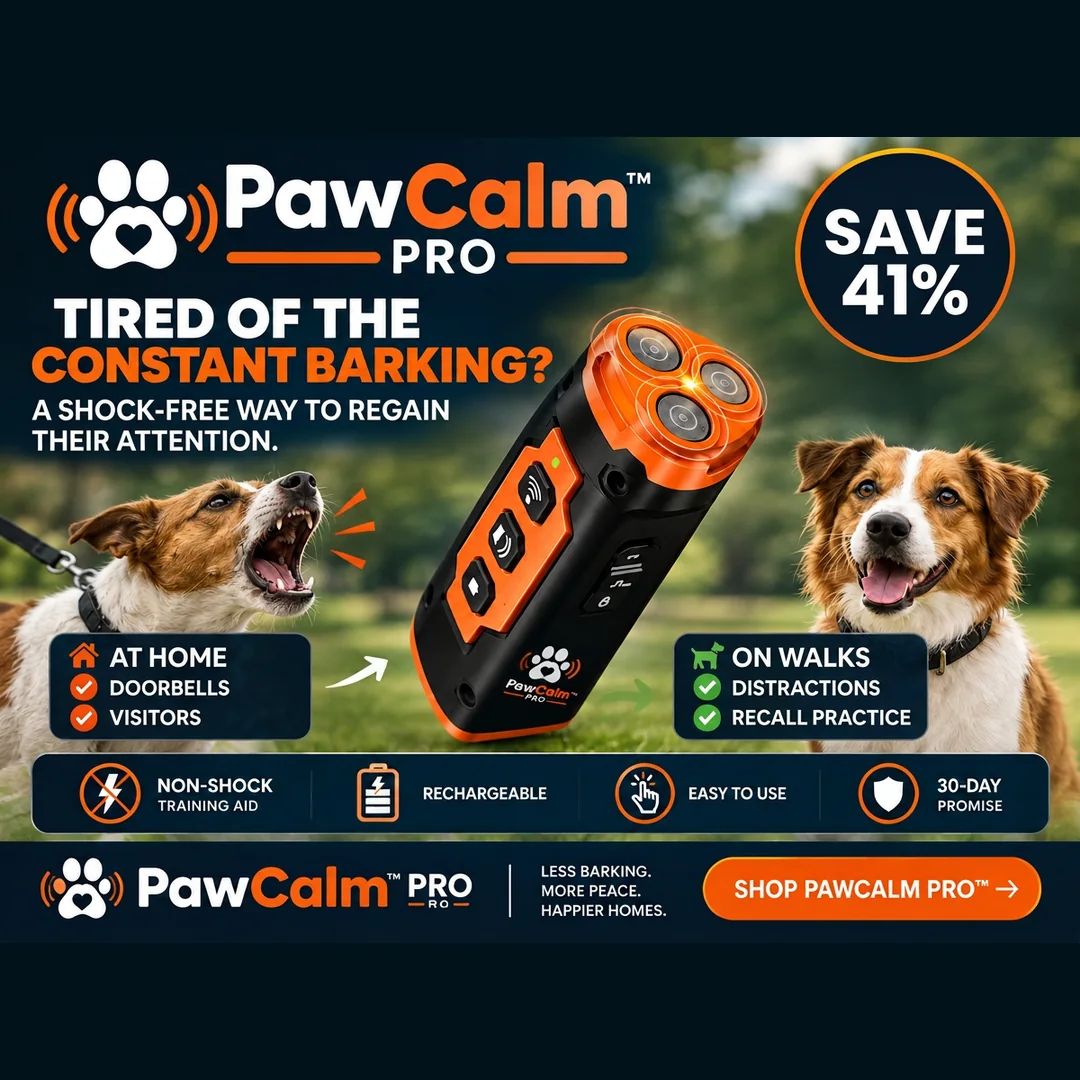
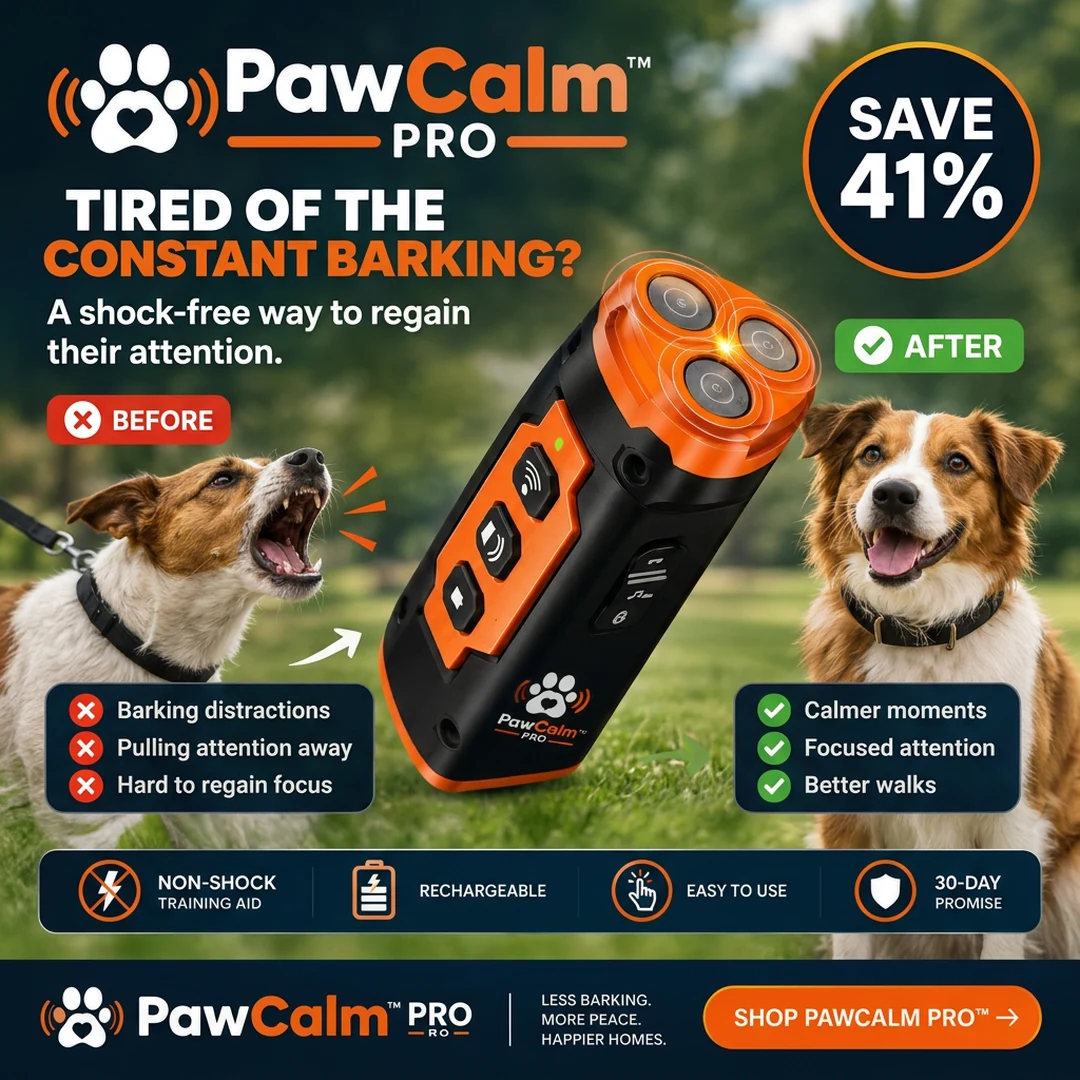
Some owners use a handheld sound cue as the interruption. PawCalm Pro gives a short ultrasonic tone to catch your dog's attention — no shock and no pain — so the positive reinforcement can happen straight after.
The device never trains your dog for you. It just makes the 'interrupt' step easier, and most owners reach for it less as the habit forms.
Make walks easier
Distance, route choice and timing matter as much as rewards. Our guide to calmer walks and lead reactivity covers this in more detail, and the free 30-Day Calm Dog Plan gives you a day-by-day schedule.
If your dog's reactions come with growling, lunging or fear that is getting worse, speak to your vet and a qualified behaviourist.
PawCalm Pro gets their attention
No shock and no pain — just a clear interruption, so you can teach what happens next.
Shop PawCalm ProGet 10% off + weekly calm-dog tips
Practical training tips and PawCalm Pro offers, once a week. Unsubscribe any time.
By subscribing: I agree to receive PawCalm Pro training tips and offers by email. I can unsubscribe at any time.